
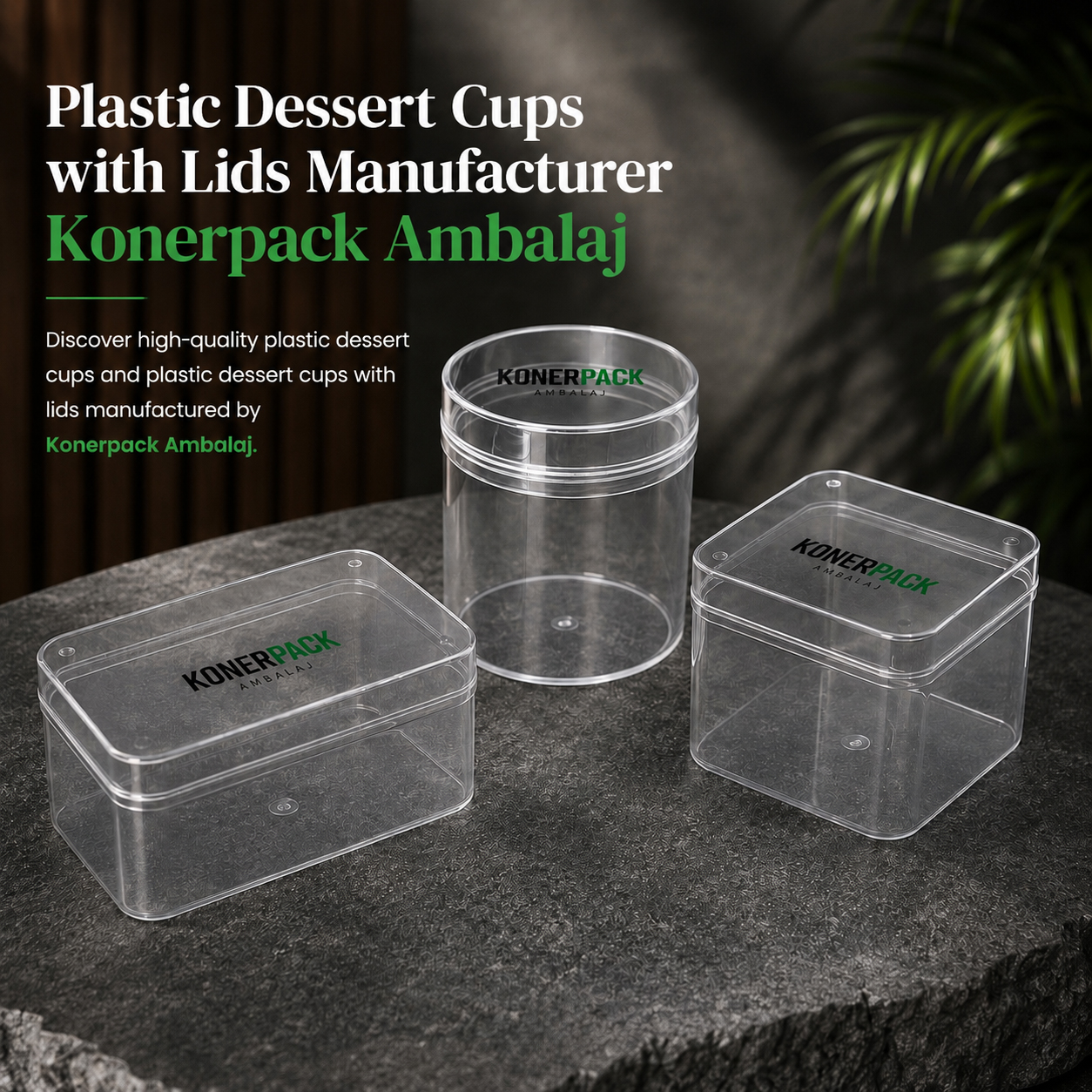
Plastic Dessert Cups with Lids Manufacturer: Complete B2B Buying Guide (2026)
Why Do Businesses Choose Plastic Dessert Cups with Lids?
Plastic dessert cups with lids are widely used because they help businesses present, protect, store, and transport single-serve desserts more efficiently. For cafés, bakeries, dessert brands, hotels, catering companies, and food distributors, choosing the right dessert cup is not only about packaging—it is also about product presentation, operational consistency, and customer experience.
Layered desserts such as tiramisu, magnolia, cheesecake, mousse, trifle, puddings, and fruit desserts benefit from clear containers that showcase their visual appeal while helping protect the product during storage and transportation.
For businesses operating in competitive markets, packaging has become an important part of product presentation. A well-designed dessert cup with a compatible lid can contribute to a cleaner presentation, more efficient handling, and a more consistent customer experience.
Why Choosing the Right Manufacturer Matters
Selecting a dessert cup is only one part of the purchasing process. Choosing the right manufacturing partner is equally important.
A reliable manufacturer should be able to provide:
- Consistent product quality
- Stable production capacity
- Reliable lead times
- Technical product support
- Multiple cup sizes and designs
- Lid compatibility across product ranges
- OEM and Private Label solutions when required
- Long-term production consistency
For importers and distributors, consistency is often more valuable than finding the lowest price. Receiving products with the same dimensions, appearance, and quality across repeated orders helps simplify inventory management and improves customer satisfaction.
Why Lids Have Become an Industry Standard
The rapid growth of takeaway, delivery services, and ready-to-eat desserts has increased the demand for dessert cups with compatible lids.
A properly designed lid can help businesses:
- Protect desserts during transportation
- Maintain presentation quality
- Organize products in refrigerated storage
- Improve handling efficiency
- Reduce the risk of accidental spills during delivery
For manufacturers and distributors supplying food service businesses, lid compatibility has become one of the most important product selection criteria.
Who Uses Plastic Dessert Cups with Lids?
Today these products are used across many sectors of the food industry, including:
- Bakeries
- Patisseries
- Coffee shops
- Café chains
- Dessert manufacturers
- Hotels
- Restaurants
- Catering companies
- Food wholesalers
- Packaging distributors
- Importers
- Private Label brands
Although every business has different operational needs, the common objective is the same: delivering desserts safely while maintaining an attractive presentation.
What You’ll Learn in This Guide
This comprehensive guide answers many of the questions international buyers ask before selecting a supplier, including:
- What are plastic dessert cups with lids?
- Why are lids important for dessert packaging?
- How do you choose the right manufacturer?
- Which cup sizes are most commonly used?
- What should importers evaluate before placing an order?
- How do OEM and Private Label projects work?
- Which cup design is suitable for different dessert types?
- What should distributors look for in long-term suppliers?
- Which technical features should be compared before purchasing?
Beyond Packaging: Supporting Business Operations
Dessert packaging is no longer only about containing food.
The right cup and lid combination can also support:
- Product consistency
- Efficient preparation
- Organized refrigerated storage
- Faster order fulfilment
- Better shelf presentation
- Safer transportation
- More professional product presentation
For growing food businesses, packaging should be evaluated as part of the entire operational workflow rather than as an isolated purchasing decision.
Manufacturer Insight
When evaluating dessert cups with lids, avoid making decisions based only on photographs or catalogue specifications. Request production samples and test them using your own dessert recipes. Assess filling convenience, lid fit, refrigerated storage, stacking performance, and transportation under real operating conditions. Practical testing provides far more valuable information than technical specifications alone.
Frequently Asked Questions About Plastic Dessert Cups with Lids
What are plastic dessert cups with lids?
Plastic dessert cups with lids are single-portion food containers designed for preparing, displaying, storing, and transporting desserts. They are commonly used for products such as tiramisu, magnolia, cheesecake, mousse, puddings, trifles, fruit desserts, and other chilled desserts.
The combination of a clear cup and a compatible lid allows businesses to present layered desserts while supporting organized storage and safer transportation.
Manufacturer Insight
When evaluating dessert cups, assess both the container and the lid together. Their compatibility directly affects daily handling and product presentation.
Why are lids important for dessert packaging?
A compatible lid helps protect prepared desserts throughout storage, transportation, and delivery. It also supports product organization in refrigerated environments and may reduce the risk of decoration being disturbed before serving.
For businesses offering takeaway or delivery services, lid compatibility is often considered an essential part of the packaging system.
Which desserts benefit most from lidded dessert cups?
Lidded dessert cups are widely used for desserts that require refrigerated storage or transportation.
Typical applications include:
- Tiramisu
- Magnolia
- Cheesecake
- Mousse
- Trifle
- Puddings
- Fruit cups
- Layered desserts
Different recipes may require different cup capacities and shapes depending on portion size and presentation style.
How do I choose the right dessert cup size?
The ideal size depends on the dessert recipe, serving weight, and presentation concept rather than following a universal standard.
As a general guideline:
|
Capacity |
Typical Applications |
|---|---|
|
200 cc |
Mini desserts, mousse, puddings |
|
250 cc |
Cheesecake, magnolia, fruit desserts |
|
270 cc |
Tiramisu, premium layered desserts |
Selecting the appropriate capacity helps maintain portion consistency while supporting an attractive presentation.
Manufacturer Insight
Always perform filling tests using your own recipes before selecting a production model.
Why is cup clarity important?
Transparent dessert cups allow customers to see the product before tasting it.
Visible layers of cream, biscuits, fruit, sauces, or chocolate create a cleaner and more professional presentation, particularly for premium desserts.
For retailers and cafés, visual presentation often plays an important role in customer perception.
What should importers evaluate before placing an order?
Professional buyers usually compare more than price.
Important evaluation criteria include:
- Food-contact compliance
- Cup clarity
- Lid compatibility
- Production consistency
- Available capacities
- Packaging quality
- Lead times
- Sample availability
- Production capacity
- Technical support
Reviewing these factors together provides a more complete assessment of long-term supplier suitability.
Why is lid compatibility so important?
The performance of the entire packaging system depends on how well the lid fits the cup.
Proper compatibility may support:
- Product protection
- Organized stacking
- Easier refrigerated storage
- Better handling during transportation
- More consistent presentation after delivery
Manufacturer Insight
Evaluate filled products rather than empty cups. Transportation testing under real operating conditions provides more reliable results.
What should distributors look for in a manufacturer?
Distributors generally benefit from working with manufacturers that offer stable production, consistent product quality, multiple product options, and reliable communication.
Long-term cooperation often depends on predictable production schedules and repeatable quality standards rather than only initial pricing.
Are OEM and Private Label production available?
Many manufacturers provide OEM and Private Label production for distributors, importers, wholesalers, and food service brands.
These projects may include:
- Custom logo printing
- Private Label packaging
- Customized production
- Export packaging
- Brand-specific solutions
Project requirements vary depending on production volume, artwork, and technical specifications.
Manufacturer Insight
Preparing vector artwork and defining branding requirements before production planning can simplify the approval process.
How can buyers evaluate product quality before mass production?
Requesting production samples remains one of the most effective evaluation methods.
Sample testing should include:
- Filling trials
- Lid fitting
- Refrigerated storage
- Transportation simulation
- Stacking evaluation
- Visual presentation
Testing under actual business conditions provides significantly more useful information than catalogue specifications alone.
Section 3
10 Benefits of Working with a Plastic Dessert Cups with Lids Manufacturer
Selecting the right manufacturer is about much more than sourcing packaging. A reliable production partner can contribute to product consistency, operational planning, supply continuity, and long-term business growth.
For importers, distributors, wholesalers, and food service brands, the following factors are often among the most important advantages of working directly with a manufacturer.
1. Consistent Product Quality
Consistency is one of the most important requirements in B2B purchasing.
Receiving products with the same dimensions, appearance, clarity, and lid compatibility across multiple production batches helps simplify inventory management and supports a consistent customer experience.
Manufacturer Insight
Ask whether quality inspections are performed throughout production, not only before shipment.
2. Stable Production Capacity
Growing businesses require suppliers that can support increasing demand.
Manufacturers with established production planning are generally better positioned to supply recurring orders while maintaining consistent quality.
Reliable production capacity becomes particularly important for:
- Multi-location businesses
- Food service chains
- Packaging distributors
- Import programs
3. Access to Multiple Cup Designs
Different desserts often require different packaging solutions.
Working directly with a manufacturer usually provides access to multiple:
- capacities,
- shapes,
- lid options,
- presentation styles.
This flexibility allows buyers to select products that better match their product portfolio instead of adapting desserts to a limited packaging range.
4. OEM Manufacturing Opportunities
Many international buyers prefer products manufactured under their own brand.
OEM production can support businesses that wish to develop branded packaging while working with an experienced manufacturing partner.
OEM projects typically require early planning regarding artwork, technical specifications, production quantities, and delivery schedules.
5. Private Label Solutions
Private Label production enables distributors and wholesalers to market products under their own brand identity.
This approach may support:
- Brand recognition
- Customer loyalty
- Product differentiation
- Long-term market positioning
Manufacturer Insight
Define branding requirements before production planning begins. Clear technical specifications reduce revisions and help streamline the manufacturing process.
6. Better Production Planning
Long-term cooperation with a manufacturer can simplify purchasing and inventory management.
Forecasting future demand allows production schedules to be organised more efficiently, reducing the likelihood of supply interruptions during busy periods.
For seasonal businesses, early planning is particularly valuable.
7. Technical Product Support
Packaging decisions often involve more than selecting a cup size.
Experienced manufacturers may provide guidance regarding:
- Capacity selection
- Cup shape
- Lid compatibility
- Filling performance
- Storage recommendations
- Packaging configurations
Technical support helps buyers evaluate products based on practical application rather than catalogue images alone.
8. Export Experience
International shipments require more than product manufacturing.
Experienced export manufacturers typically understand the importance of:
- Export documentation
- Packaging protection
- Carton optimisation
- Loading efficiency
- International logistics planning
These factors can contribute to smoother international purchasing processes.
9. Long-Term Supply Reliability
A successful business relationship depends on reliable deliveries over time.
When selecting a manufacturing partner, buyers should evaluate:
- Production continuity
- Communication quality
- Delivery performance
- Product consistency
- Future production capability
Long-term reliability often has a greater business impact than achieving the lowest purchase price on a single order.
10. Opportunity to Grow Together
As businesses expand, packaging requirements often change.
New dessert concepts, additional product lines, larger production volumes, and new export markets may require different packaging solutions.
Working with a manufacturer capable of supporting future growth can simplify this transition and reduce the need to change suppliers as business requirements evolve.
Manufacturer Insight
Evaluate suppliers not only for your current needs but also for where your business may be in the next three to five years. A manufacturing partner that can scale alongside your business often provides greater long-term value than one selected solely on initial pricing.
Manufacturer Benefits Overview
|
Business Requirement |
How a Manufacturer Can Support |
|---|---|
|
Consistent Quality |
Stable production standards across repeat orders |
|
Product Variety |
Multiple sizes, shapes, and lid options |
|
OEM Production |
Custom manufacturing for branded products |
|
Private Label |
Packaging under your own brand |
|
Production Planning |
Better forecasting and recurring supply |
|
Technical Support |
Product selection and application guidance |
|
Export Experience |
International shipment preparation |
|
Supply Continuity |
Reliable long-term production capability |
|
Business Growth |
Flexible production for future expansion |
|
Partnership |
Ongoing communication and operational support |
Section Summary
Choosing a plastic dessert cups with lids manufacturer is not simply a purchasing decision—it is the selection of a long-term production partner. Product consistency, technical expertise, reliable manufacturing, and scalable production capacity all contribute to building a more efficient and resilient supply chain.
For importers, distributors, and food service brands, evaluating these factors together provides a stronger foundation for sustainable business growth than comparing unit prices alone.
Which Dessert Cup Fits Your Product Range?
Selecting the right dessert cup is not simply about capacity. Different desserts require different shapes, presentation styles, and filling volumes.
For importers, distributors, and food service brands, choosing products according to the intended application often leads to a better customer experience and a more efficient product portfolio.
The following comparisons are intended as practical guidance for common dessert categories.
Product Comparison Guide
|
Model |
Capacity |
Shape |
Recommended Applications |
Presentation Style |
|---|---|---|---|---|
|
EVVA |
270 cc |
Round |
Magnolia, fruit desserts, trifles |
Premium layered presentation |
|
NIDA |
270 cc |
Rectangular |
Tiramisu, layered desserts |
Contemporary presentation |
|
NEVA |
250 cc |
Square |
Cheesecake, brownie desserts |
Modern café presentation |
|
BODEGA |
250 cc |
Round |
Everyday desserts, puddings, magnolia |
Versatile presentation |
|
ROMA |
200 cc |
Footed Square |
Premium desserts, hotel service |
Elegant serving |
|
DIAMOND |
200 cc |
Square |
Mini desserts, tasting portions |
Compact premium presentation |
EVVA 270 cc
The EVVA 270 cc round dessert cup is well suited for layered desserts that benefit from additional presentation space.
Its capacity provides room for:
- cream layers,
- biscuit layers,
- fresh fruit,
- decorative toppings.
Typical applications include:
- Magnolia
- Trifle
- Fruit desserts
- Premium layered desserts
Suitable for
- Café chains
- Bakeries
- Dessert brands
- Coffee shops
- Food service distributors
Manufacturer Insight
Businesses offering premium dessert collections often prefer larger presentation areas that allow decorative toppings without overcrowding the product.
NIDA 270 cc
The NIDA rectangular dessert cup provides a different presentation style compared with traditional round containers.
Its rectangular design works particularly well for structured layered desserts where straight lines help highlight individual layers.
Typical applications include:
- Tiramisu
- Layered desserts
- Premium dessert collections
Suitable for
- Premium bakeries
- Dessert manufacturers
- Hotel suppliers
- Food distributors
Manufacturer Insight
Rectangular presentation is often selected by businesses looking to differentiate premium dessert collections from standard product lines.
NEVA 250 cc
NEVA offers a square presentation style that fits modern dessert concepts.
Its balanced capacity makes it suitable for desserts requiring portion consistency while maintaining a contemporary appearance.
Typical applications include:
- Cheesecake
- Brownie desserts
- Mousse
- Modern café desserts
Suitable for
- Coffee chains
- Modern cafés
- Boutique bakeries
- Dessert retailers
BODEGA 250 cc
BODEGA combines a classic round shape with versatile capacity, making it suitable for businesses serving a wide variety of desserts.
Typical applications include:
- Magnolia
- Puddings
- Fruit desserts
- Daily dessert production
Suitable for
- Bakeries
- Cafés
- Catering companies
- Food wholesalers
Manufacturer Insight
Versatile cup designs can simplify inventory management when several dessert recipes share similar portion sizes.
ROMA 200 cc
ROMA features a footed design intended for premium individual servings.
Rather than focusing on larger portions, this model emphasizes elegant presentation for hospitality environments.
Typical applications include:
- Boutique desserts
- Hotel service
- Fine dining
- Premium tasting menus
Suitable for
- Hotels
- Restaurants
- Catering companies
- Premium dessert brands
DIAMOND 200 cc
DIAMOND is designed for compact individual servings where portion control is important.
Its size makes it suitable for:
- Mini desserts
- Dessert samplers
- Individual mousse portions
- Buffet presentations
Suitable for
- Hotels
- Event catering
- Restaurants
- Dessert boutiques
Product Selection by Dessert Type
|
Dessert |
Recommended Models |
|---|---|
|
Magnolia |
EVVA 270 cc, BODEGA 250 cc |
|
Tiramisu |
NIDA 270 cc |
|
Cheesecake |
NEVA 250 cc |
|
Mousse |
DIAMOND 200 cc |
|
Premium Desserts |
ROMA 200 cc |
|
Fruit Desserts |
EVVA 270 cc |
|
Trifle |
EVVA 270 cc |
|
Daily Dessert Production |
BODEGA 250 cc |
Product Selection by Business Type
|
Business Type |
Suggested Models |
|---|---|
|
Bakery |
EVVA, BODEGA, NIDA |
|
Coffee Shop |
EVVA, NEVA |
|
Dessert Manufacturer |
EVVA, NIDA, BODEGA |
|
Hotel |
ROMA, DIAMOND |
|
Catering Company |
BODEGA, EVVA |
|
Distributor |
Full product range |
|
Importer |
Full product range based on market demand |
One Cup or Multiple Product Lines?
Some buyers prefer a single cup design across all dessert categories, while others choose multiple models to better match different recipes.
Using several cup styles may offer advantages such as:
- Better presentation for different desserts
- More consistent portion control
- Greater flexibility for seasonal products
- Clear product differentiation
- Wider product portfolio
Rather than selecting a single solution for every application, many businesses evaluate their dessert range first and then build a packaging portfolio around their products.
Manufacturer Insight
Before placing large production orders, prepare several desserts using different cup models and compare presentation, filling efficiency, refrigerated storage, transportation performance, and customer feedback. Real-world testing often provides the most reliable basis for product selection.
Section 5
Frequently Asked Questions
Why do international buyers prefer dessert cups with lids?
Many food service businesses prefer dessert cups with lids because they help simplify storage, transportation, and takeaway operations. Compatible lids also support product presentation by helping desserts arrive in a clean and organised condition.
Which industries commonly use plastic dessert cups with lids?
These products are widely used across the food industry, including:
- Bakeries
- Café chains
- Coffee shops
- Hotels
- Restaurants
- Catering companies
- Dessert manufacturers
- Food wholesalers
- Packaging distributors
- Private Label brands
Different industries may require different capacities, shapes, and presentation styles depending on their product range.
Which cup size should I choose?
There is no universal answer.
The correct size depends on:
- Dessert recipe
- Portion weight
- Decoration style
- Customer expectations
- Serving concept
Testing your own recipes before mass production is generally the most reliable approach.
Are round or rectangular cups better?
Neither design is universally better.
Round cups are commonly selected for desserts such as magnolia and fruit desserts, while rectangular designs are often chosen for structured layered desserts like tiramisu.
The most suitable option depends on the presentation style rather than the shape itself.
Why is lid compatibility important?
A dessert cup and its lid function as one packaging system.
Proper compatibility may contribute to:
- Better product protection
- Organised refrigerated storage
- Easier transportation
- Consistent product presentation
- More efficient daily operations
What should importers evaluate before selecting a manufacturer?
Professional buyers generally compare several factors before placing orders, including:
- Product consistency
- Manufacturing capability
- Food-contact compliance
- Sample quality
- Export experience
- Lead times
- Technical support
- Packaging quality
Evaluating these factors together provides a more complete picture than comparing prices alone.
Why are production samples important?
Samples allow buyers to evaluate products under real operating conditions before committing to larger production volumes.
Typical evaluations include:
- Filling performance
- Lid fit
- Refrigerated storage
- Stacking
- Transportation
- Product presentation
Testing actual desserts often provides more valuable information than reviewing technical specifications alone.
Can one cup design be used for every dessert?
Some businesses successfully use a single product across multiple recipes.
However, companies offering a wider dessert range often benefit from selecting different capacities and shapes according to each product category.
This approach may improve presentation consistency and operational flexibility.
What makes a reliable manufacturing partner?
A reliable manufacturer offers more than production.
Long-term partners typically provide:
- Stable quality
- Reliable communication
- Technical guidance
- Consistent lead times
- Product development support
- Scalable manufacturing capacity
These characteristics are often important for businesses planning long-term supply relationships.
How can buyers simplify future purchasing?
Planning ahead is usually more effective than purchasing only for immediate demand.
Forecasting future requirements allows manufacturers to schedule production more efficiently while helping buyers maintain a more stable supply chain.
Manufacturer Insight
Successful partnerships are built on long-term planning rather than individual transactions. Buyers who share product forecasts and business objectives early often benefit from smoother production planning and more predictable deliveries.
Buyer Evaluation Checklist
Before selecting a dessert cup manufacturer, consider the following questions:
|
Evaluation Point |
Checked |
|---|---|
|
Product quality has been evaluated |
☐ |
|
Samples have been tested |
☐ |
|
Lid compatibility has been verified |
☐ |
|
Production capacity has been discussed |
☐ |
|
Export experience has been confirmed |
☐ |
|
Lead times have been reviewed |
☐ |
|
Packaging quality has been evaluated |
☐ |
|
OEM / Private Label options have been discussed |
☐ |
|
Technical support is available |
☐ |
|
Long-term supply capability has been assessed |
☐ |
Conclusion
Choosing a plastic dessert cups with lids manufacturer is not simply about purchasing packaging—it is about selecting a long-term production partner capable of supporting your business as it grows.
Successful supplier relationships are built on consistent quality, reliable manufacturing, technical expertise, and clear communication. By evaluating production capability, product consistency, lid compatibility, export experience, and long-term reliability together, buyers can make more informed decisions that support sustainable business growth.
Whether you are an importer, distributor, food service supplier, or Private Label brand, selecting packaging that matches your products, operational requirements, and future business plans helps create a stronger and more efficient supply chain.
Related Guides
To learn more about dessert packaging and international sourcing, you may also find these guides useful:
- ➡️ Plastic Dessert Cups Manufacturer: Complete B2B Guide
- ➡️ Plastic Dessert Cups Wholesale Buying Guide
- ➡️ Plastic Dessert Cups with Lids Buying Guide
-
➡️ Konerpack Instagram →
